Lower Blepharoplasty
Lower blepharoplasty is surgery to address prominent under-eye bags and selected changes in lower eyelid contour or skin. The surgical approach depends on the anatomy, eyelid support, and underlying cause of the concern.
WHO THIS MAY HELP
Who may benefit from lower blepharoplasty?
- Persistent under-eye bags related to prominent lower eyelid fat
- Excess or loose lower eyelid skin that may benefit from surgical adjustment
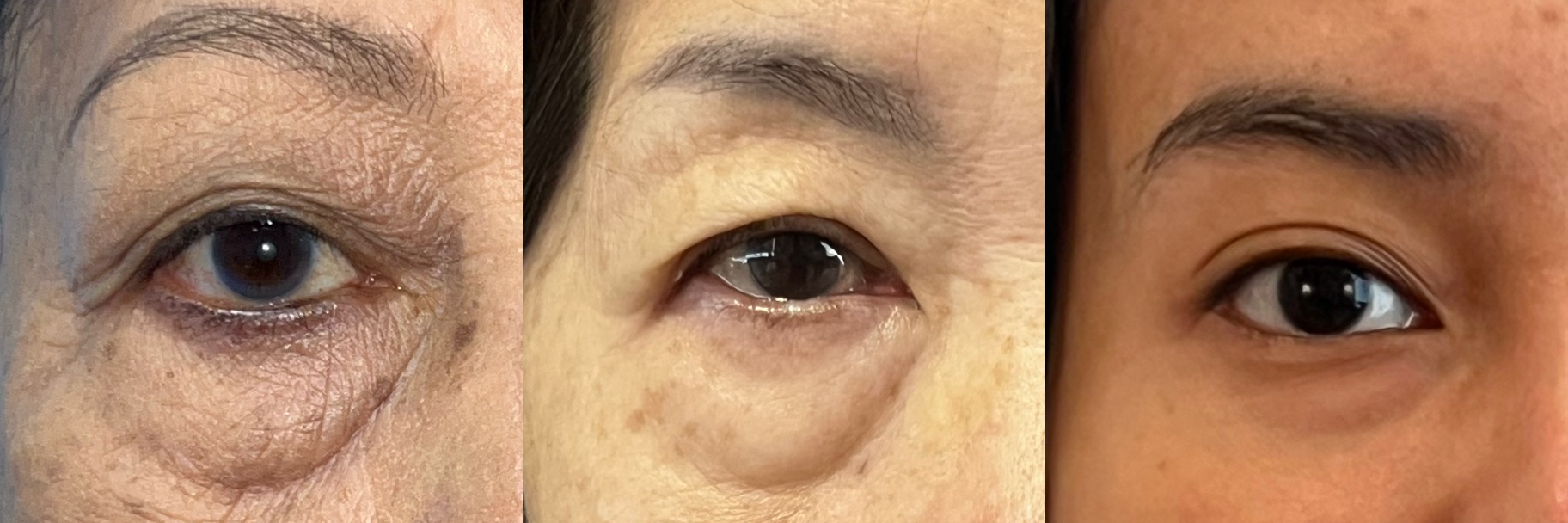
Suitability depends on the examination, skin quality, fat distribution, eyelid support, medical history, and individual goals. Not every under-eye concern is best treated with surgery.
UNDERSTANDING UNDER-EYE BAGS
Why do under-eye bags develop?
The animation explains one mechanism of under-eye bags; the underlying anatomy and treatment needs vary between patients.
WHAT SURGERY CAN ADDRESS
What improvements can you expect?
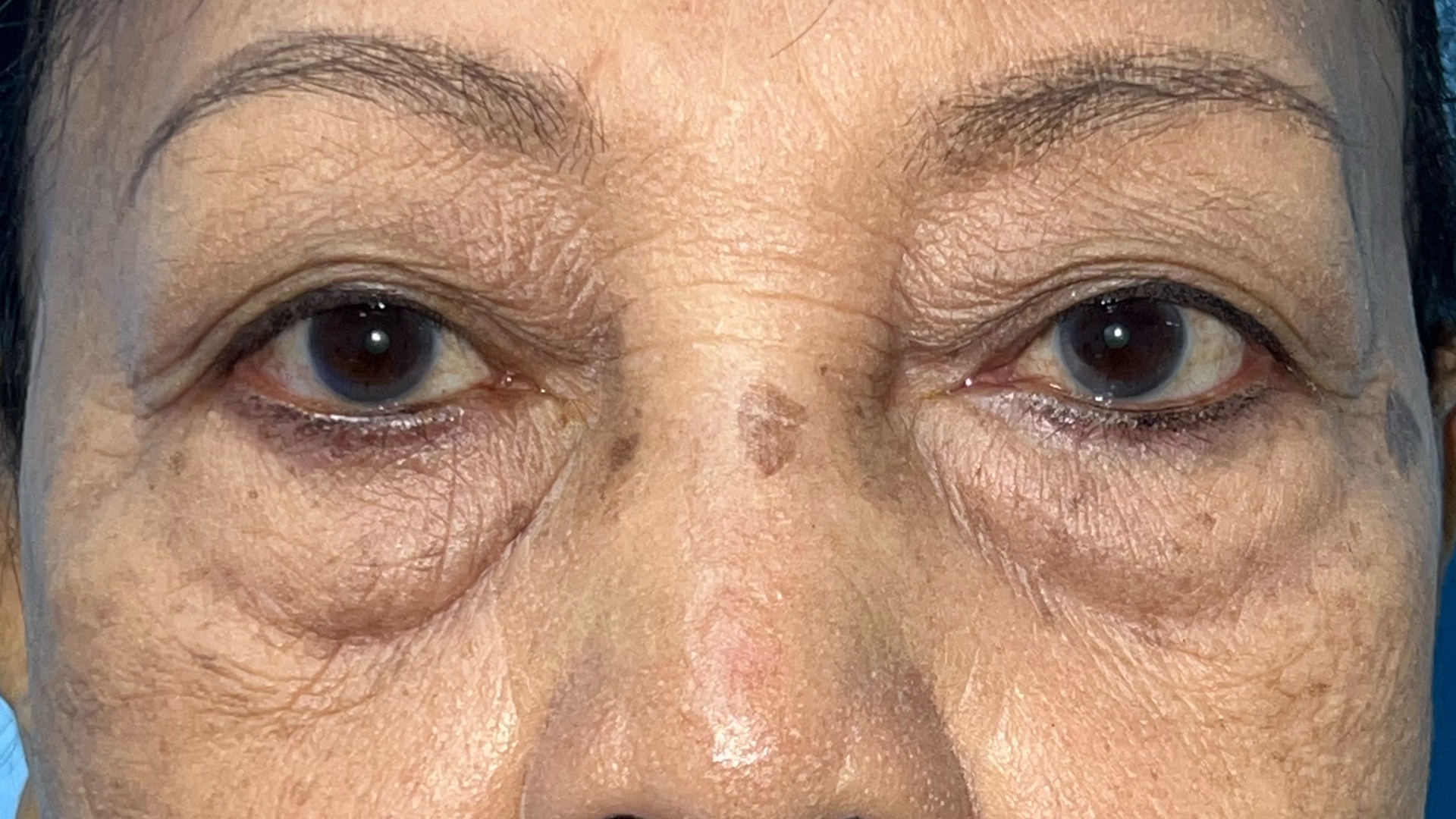 Before
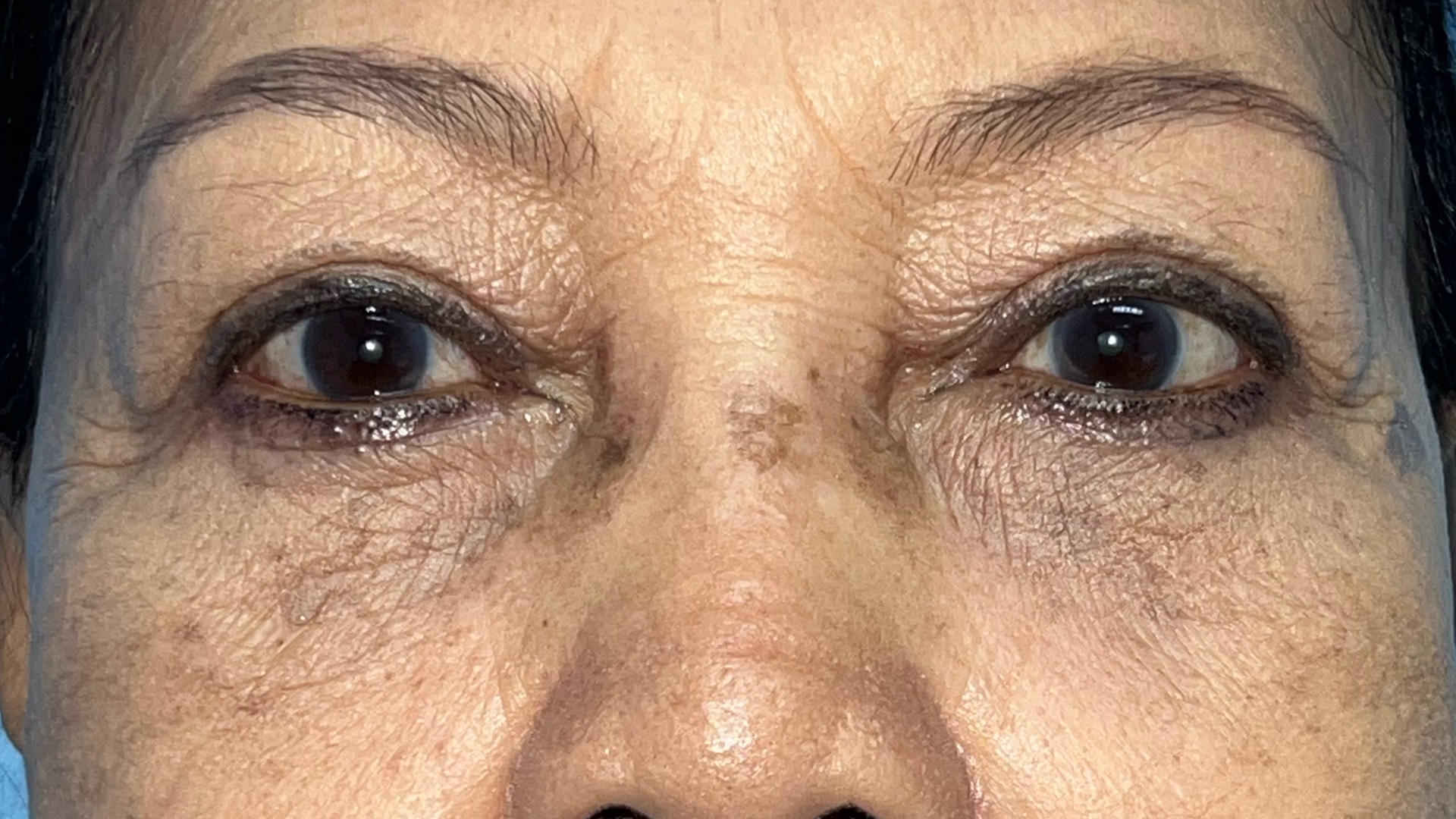 After · 2 months
Lower blepharoplasty · 2-month follow-up
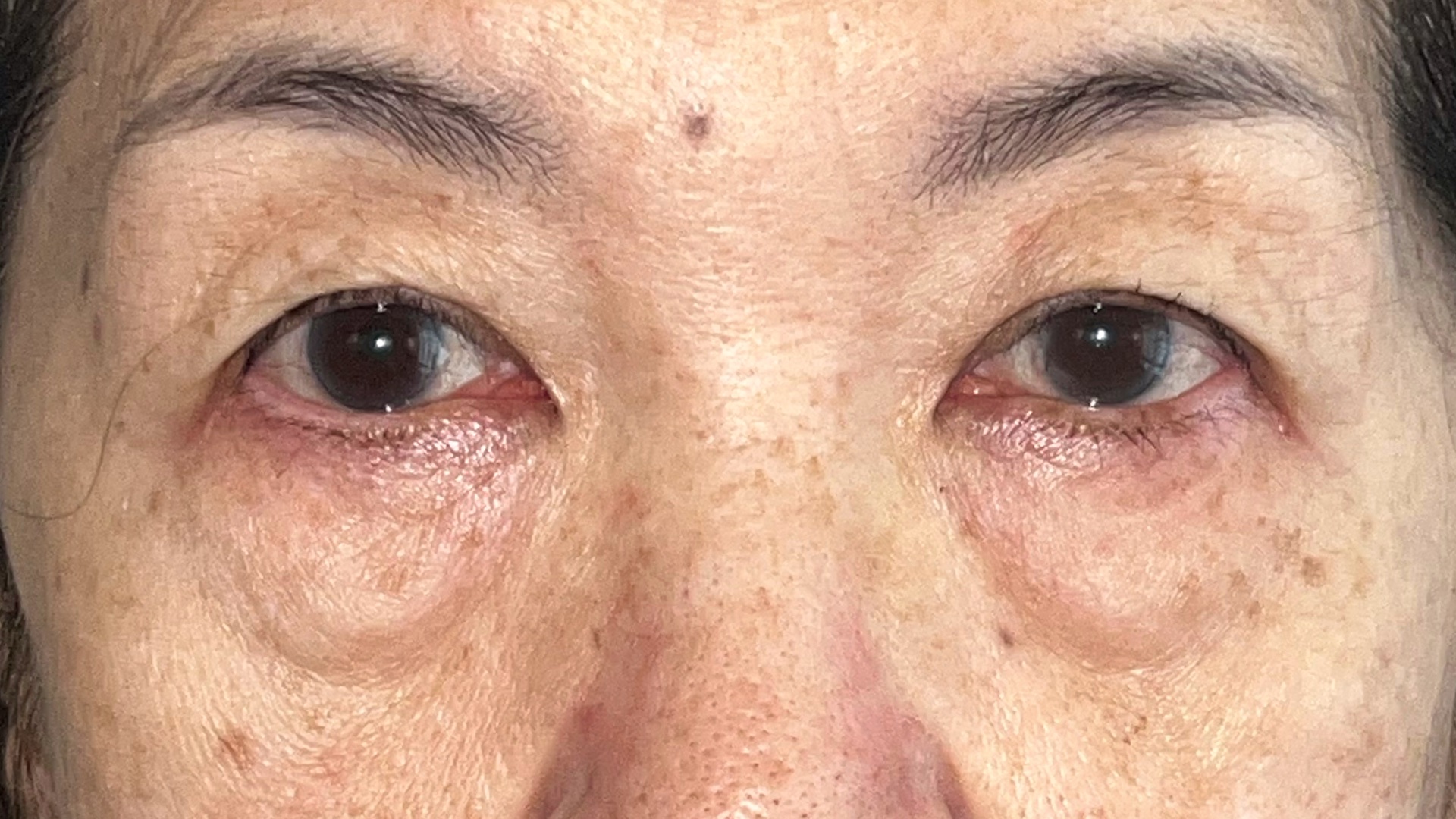 Before
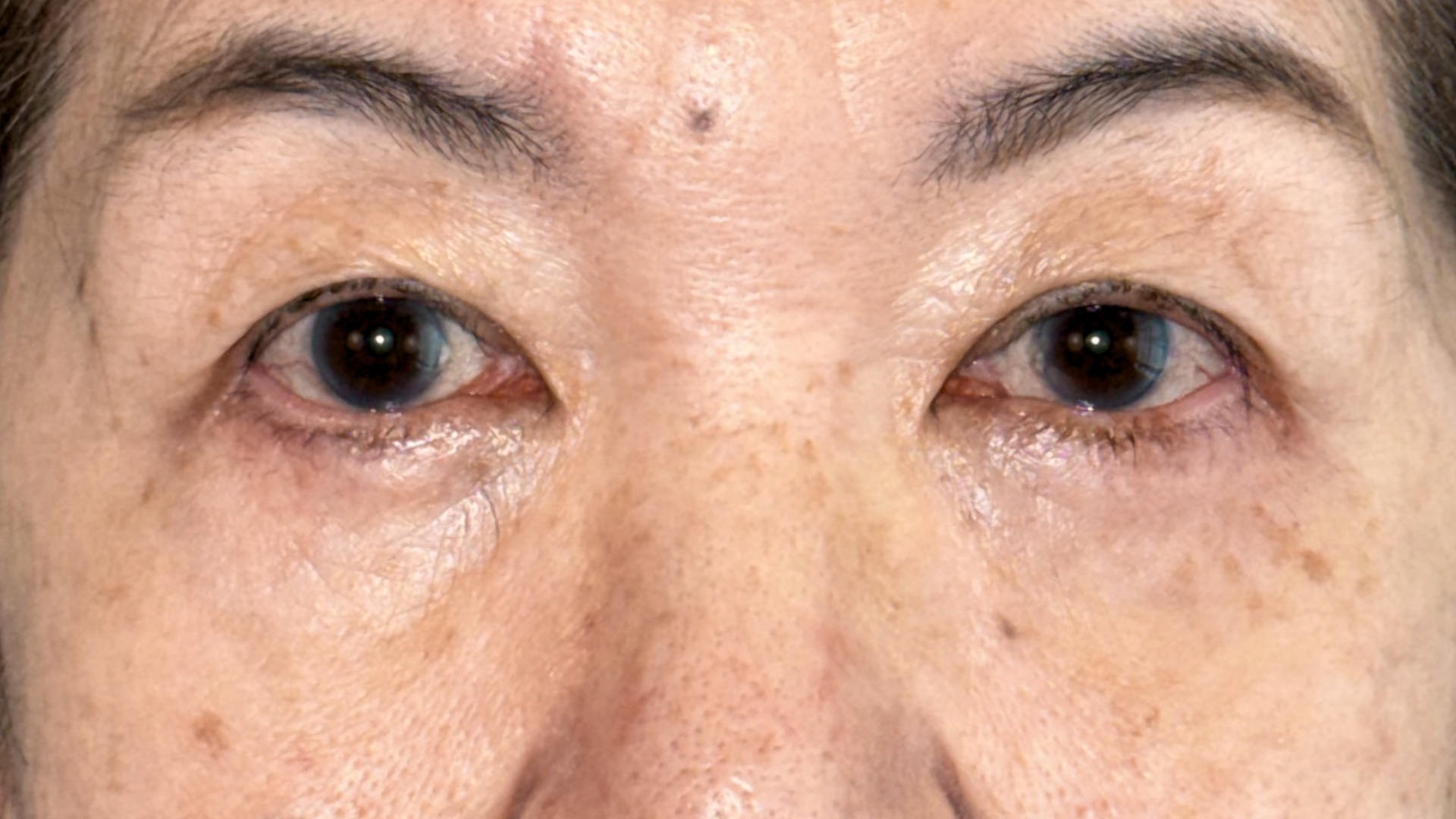 After · 1 year
Lower blepharoplasty · 1-year follow-up
Results vary. Surgery does not reliably correct every type of dark circle, pigmentation, fine wrinkle, or hollowing, and a completely smooth under-eye area or perfect symmetry cannot be guaranteed.
WHAT HAPPENS DURING SURGERY
What does the operation involve?
Depending on the anatomy and surgical plan, the incision may be placed inside the lower eyelid (transconjunctival) or just below the eyelashes (subciliary). Prominent fat may be adjusted or repositioned to improve the lower eyelid contour, and excess skin may be addressed when indicated.
The incision and technique are selected after examination rather than from the appearance of under-eye bags alone.
RECOVERY
Swelling and bruising improve gradually
Swelling, bruising, tightness, and temporary changes in lower eyelid appearance are common during early recovery. The contour continues to settle as swelling decreases, and healing varies between patients.
Increasing pain or a sudden change in vision requires prompt assessment.
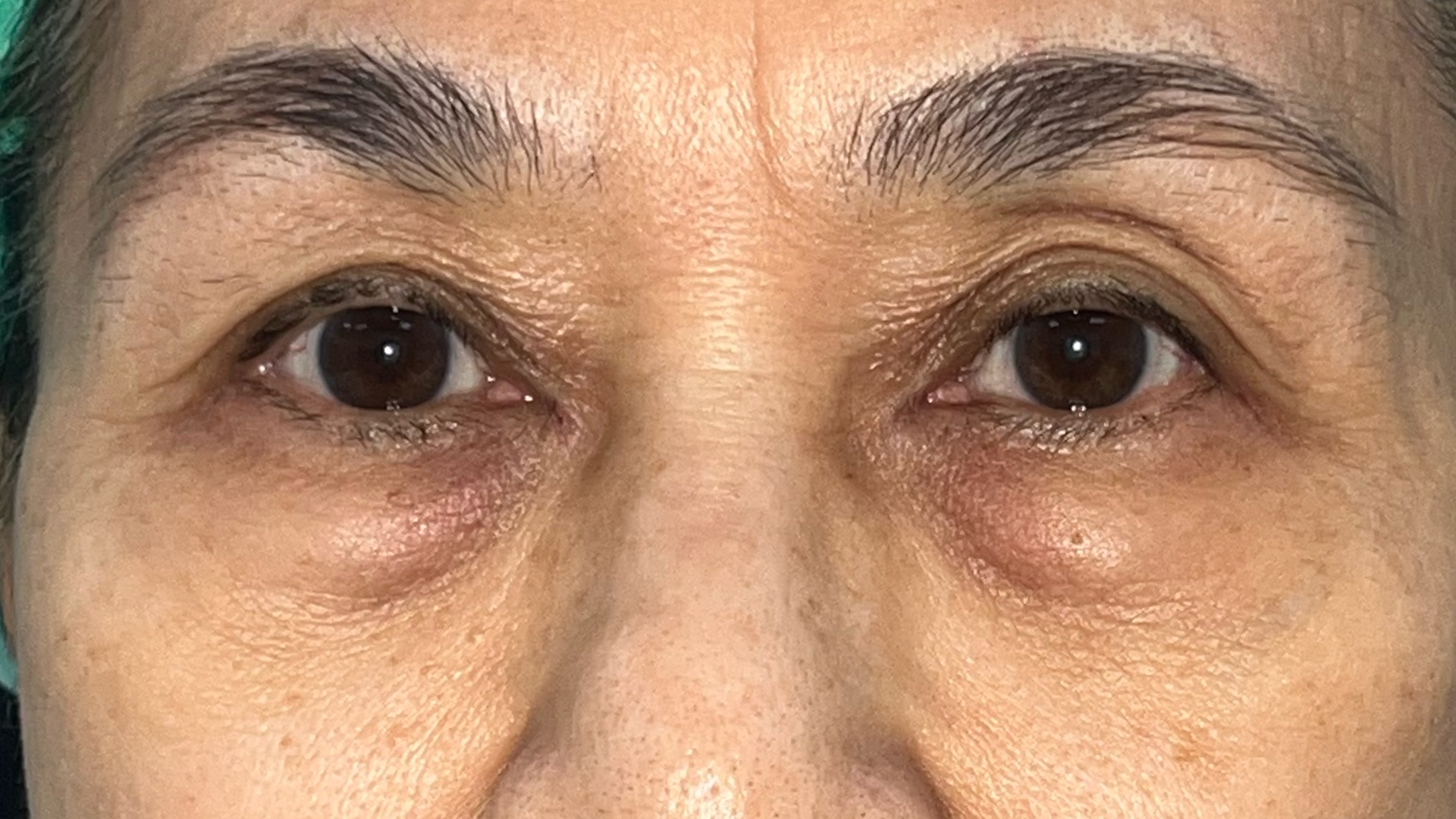
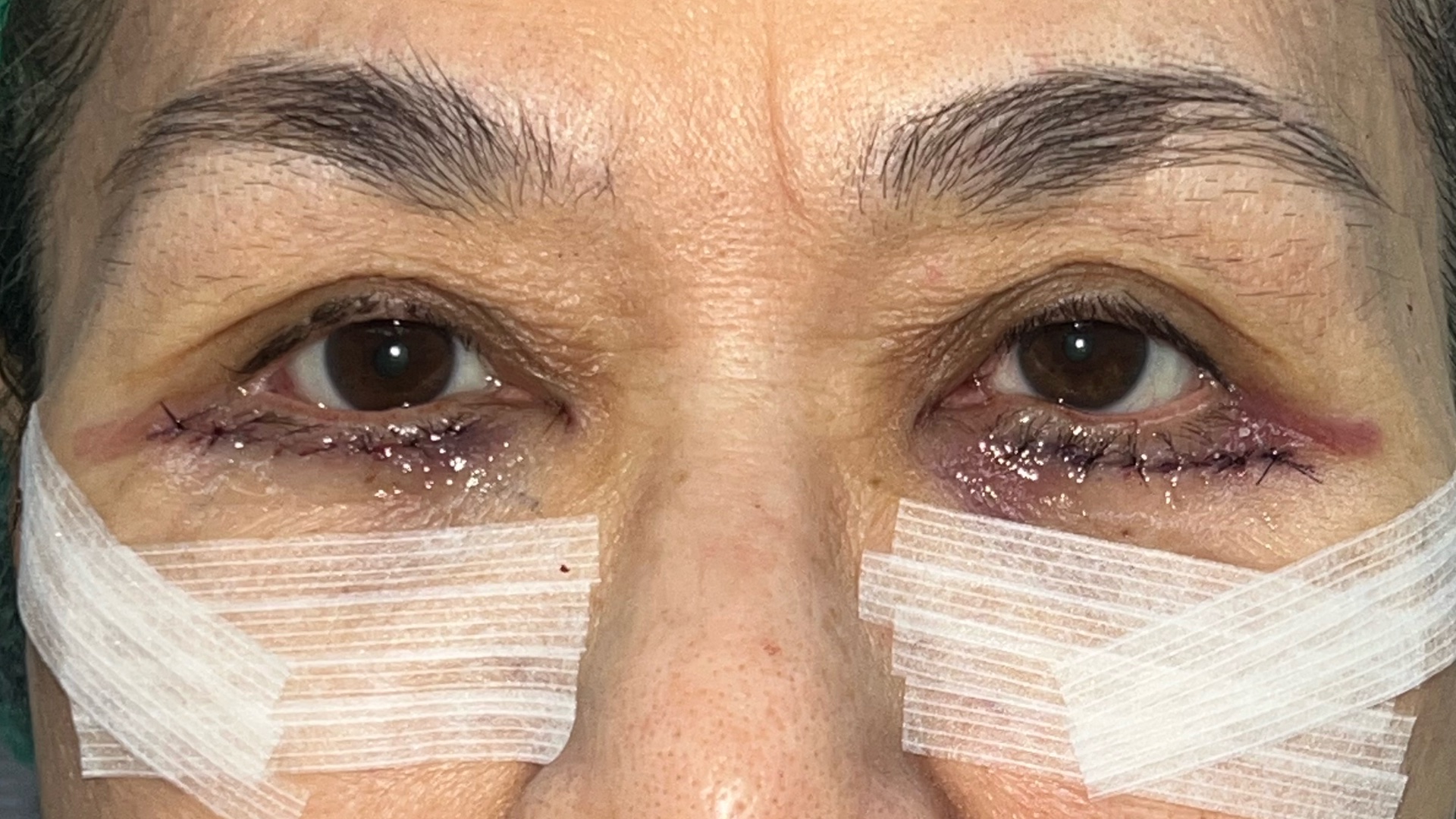
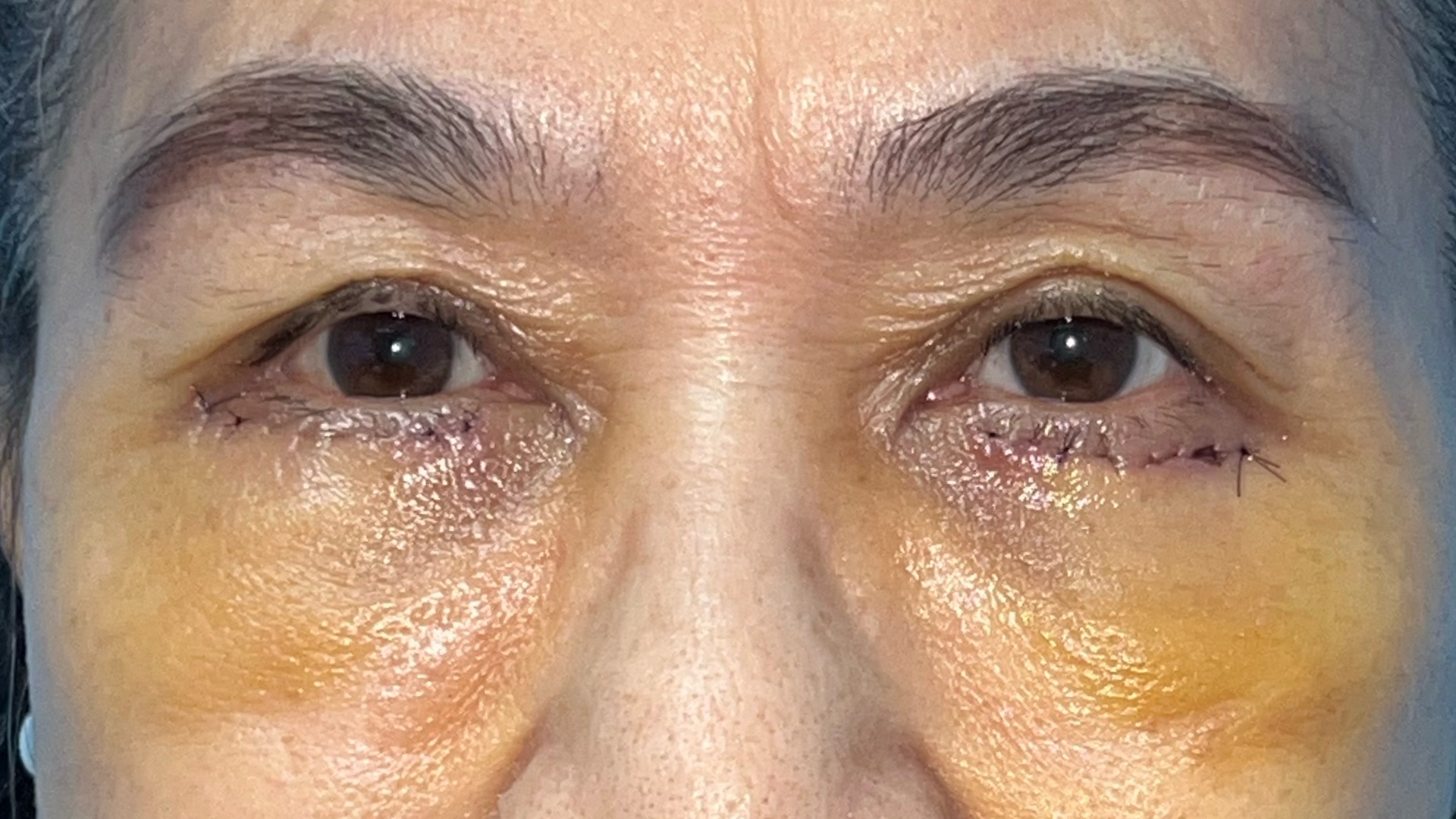
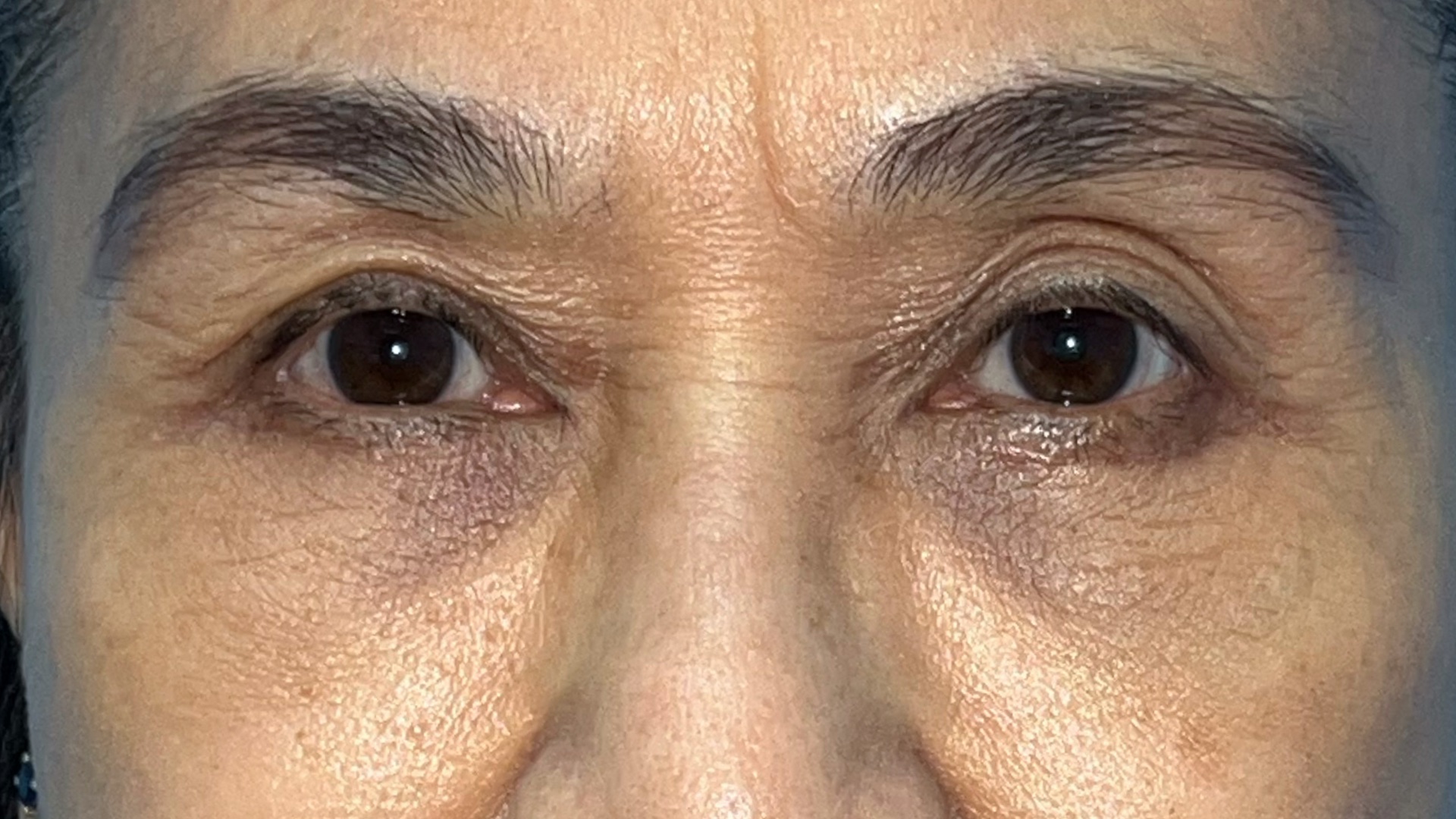
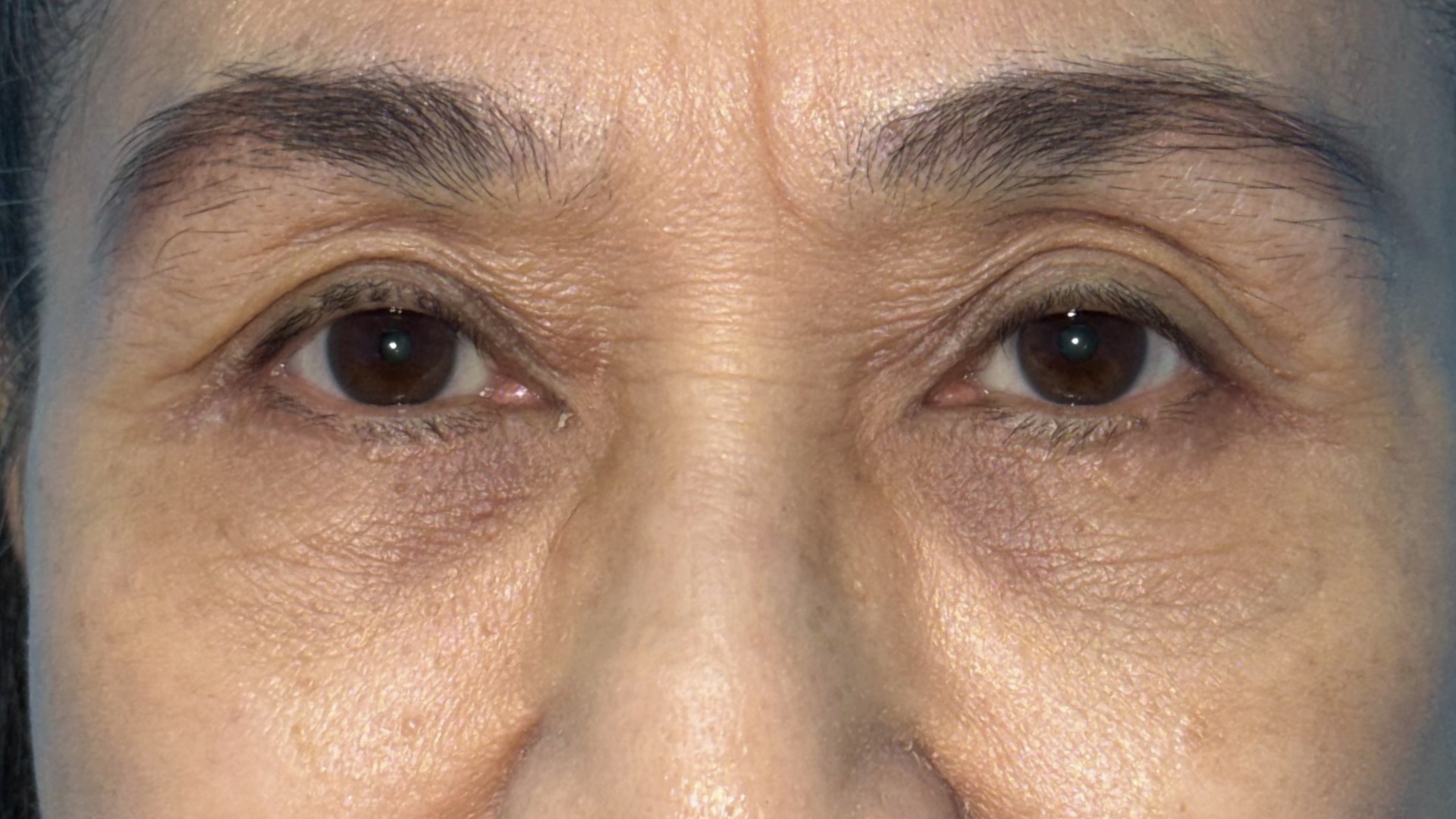
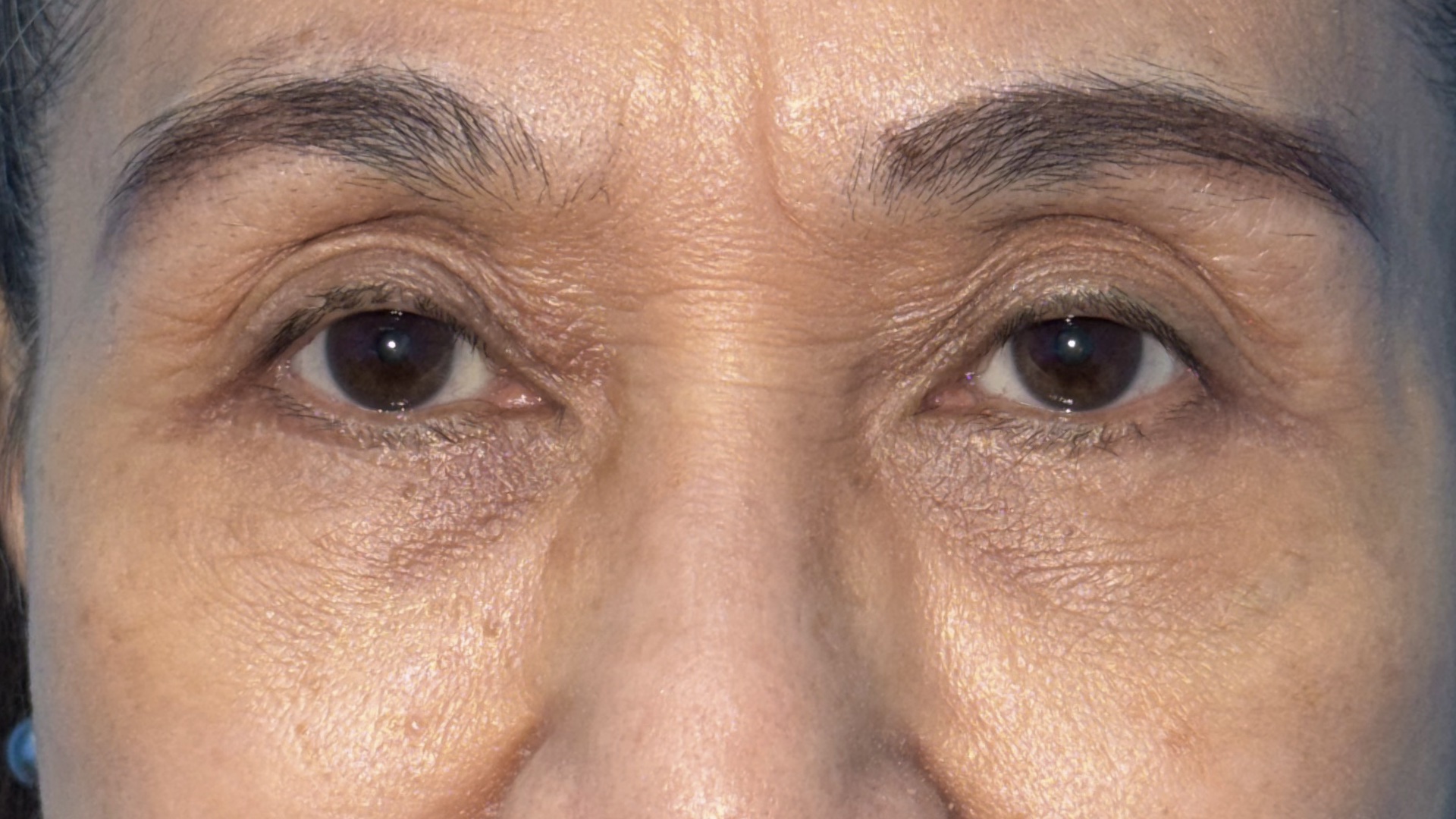
Recovery varies between patients. These images show one patient’s course from before surgery through 1 year.
RISKS & LIMITATIONS
Understanding the risks and limitations
Potential risks include bleeding, infection, swelling, bruising, visible scarring, asymmetry, contour irregularity, persistent or recurrent bags, dry-eye symptoms, and the possibility of revision. Lower eyelid retraction or ectropion may occur, particularly when eyelid support is compromised. Individual risk varies with anatomy, previous surgery, eyelid support, and the technique selected.
Lower blepharoplasty · 2-month follow-up
RELATED PATIENT RESULTS
See lower eyelid results in context
Each result includes the procedure performed and follow-up period to help place the photographs in clinical context.
View Patient ResultsRELATED PROCEDURES
Similar concerns may require a different operation
CONSULTATION
Discuss your under-eye concerns with Dr. Joe
A consultation allows your lower eyelid anatomy, skin, fat distribution, and eyelid support to be assessed so the appropriate treatment options and their limitations can be discussed.
Request Consultation